
"British tea consumption"
300 article(s) found

The History of Coffee introduction and expansion in China in the early stage (4)
1. Textual Research on the early introduction of Coffee in Taiwan in 1884 1.1 in May 2004, the author investigated Gukeng in Yunlin County and Alishan Coffee growing area in Chiayi County. In November 2009, I once again visited Gukeng in Yunlin County and Dongshan Coffee growing area in Tainan County, Jianhu Mountain World Coffee Museum, and visited the World Coffee Exhibition in Taipei and the National Museum of Taiwan History.

Cafes have sprung up all over China. Chinese people like to drink milk coffee and are disgusted with the soil.
Industry insiders say that China's coffee consumption is growing at an annual rate of 15%, while the global average rate is 2%, so China is the fastest growing coffee market in the world.

The historical origin and spread of coffee
Coffee enters Europe Venice merchants first brought coffee to Europe in 1615. By 1683, Europe's first coffee shop opened in Venice, and the most famous was the Floran Cafe, which opened in St. Mark's Square in 1720.

History of introduction and expansion of Coffee in China in the early stage of Coffee Development (4)
1. Textual Research on the early introduction of Coffee in Taiwan in 1884 1.1 in May 2004, the author investigated Gukeng in Yunlin County and Alishan Coffee growing area in Chiayi County. In November 2009, I once again visited Gukeng in Yunlin County and Dongshan Coffee growing area in Tainan County, Jianhu Mountain World Coffee Museum, and visited the World Coffee Exhibition in Taipei and the National Museum of Taiwan History.

Cafes have sprung up all over China. Chinese people like to drink milk coffee and are disgusted with the soil.
Core tip: industry insiders say that China's coffee consumption is growing at an annual rate of 15%, while the global average rate is 2%, so China is the fastest growing coffee market in the world.
The residual value of coffee?
China, with a strong tea culture, has a broad potential for coffee consumption and is becoming the largest coffee consumption market in the world.

The pregnancy rate of women with five cups of coffee a day has halved.
A new study unveiled by Danish scholars at the 28th European Society for Human Reproduction and Embryology (ESHRE) has alarmed some coffee lovers by finding that women who drink more than five cups of coffee a day are 50 per cent less likely to conceive.

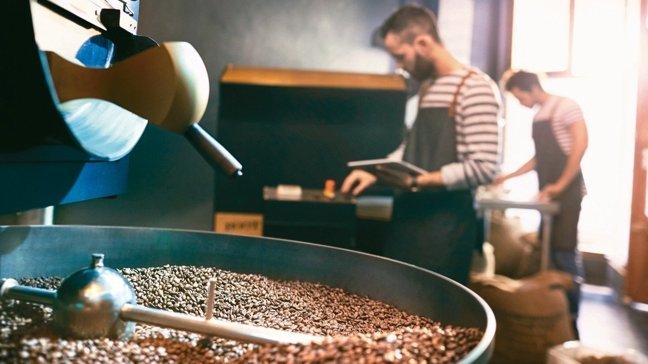
World delicious Tour / a pot of coffee roasted in Europe for a century
Professional coffee knowledge exchange more coffee bean information please follow the coffee workshop (Wechat official account cafe_style) World delicious Tour / a pot of coffee roasting there are three major drinks in Europe for a century, wine, tea and coffee, the historical background of the three is very different. Human drinking has a history of more than 12000 years, which can be traced back to Neolithic Mesopotamia (two river basins).
Map of World Coffee Culture | differences in roasting Coffee in the three Coffee Culture circles in Europe
Professional coffee knowledge exchange more coffee bean information please follow the coffee workshop (Wechat official account cafe_style) there are three major drinks, wine, tea, coffee, the historical background of the three is very different. Human drinking has a history of more than 12000 years, and there are records of making and drinking alcohol in Mesopotamia (two river basins) dating back to the Neolithic Age.

Introduction to the History of how Coffee spread to the World
According to historical records, coffee was first planted in Taiwan in 1884, which opened the prelude to the development of coffee in China. The earliest coffee cultivation in the mainland began in Yunnan, when a French missionary brought the first coffee seedlings to Binchuan County in Yunnan Province at the beginning of the 20th century. In the following nearly a hundred years, coffee was only planted in the vast territory of China. Of course

Nanjing is now the first full-paper cafe with the theme of wildlife protection in China.
The bar is a cascading jungle, with distant mountains and rivers on its back, gurgling streams on the ground, shrubs, grasslands, woods, and elephants, leopards, giraffes and zebras walking among them. There are no posters of coffee, no eye-catching menu, and no excessive diet display. On March 3, the eco-friendly cafe named Lutte was in Xinjiekou Sanpower International.

Tanzania coffee beans with delicate fragrance introduce boutique coffee
Tanzanian coffee has also developed in the hands of German and British colonists and has long been loved by Europeans and squeezed into the ranks of famous products. The most favorable factors that make Tanzanian coffee famous are Hemingway and his novels. Ever since Hemingway embarked on his career as a writer in France, he has been connected with Tanzania and Mount Kilimanjaro

History of coffee origin and spread
The Arabs failed to spread coffee in Asia, but the Dutch did! During their colonization, they planted coffee in Malabar, India, and brought coffee to Batavia, Java, Indonesia, in 1699. The Dutch colonies were once the main suppliers of coffee to Europe. Indonesia is currently the fourth largest coffee exporter in the world.

India opens its first post office coffee! In addition to regular coffee, they also sell packaged Ganges water.
Recently, Indian local media "India KuaiBao" (TheIndianExpress) reported that India's post office actually opened its first coffee shop in Calcutta, India's third largest city. People's impression of the post is that it is a place for express delivery, or a place for banking business. Anterior segment

Lone Star is selling Italian coffee maker Evoca.
Professional coffee knowledge exchange More coffee bean information Please pay attention to Coffee Workshop (Weixin Official Accounts cafe_style) US private equity fund Lone Star has hired Deutsche Bank to explore the potential sale of Evoca, an Italian vending machine and coffee machine manufacturer. It is understood that the latter is valued at about 1.5 billion euros. Evoca was founded in 1924 and is headquartered in B, Italy.

Why do Chinese people like coffee when they eat steamed buns with coffee?
Tianjin GouBuLi Group has accepted Australia's largest coffee chain brand. Please remember to match coffee when eating GouBuLi steamed buns in the future. Zhang Yansen, chairman of Goubuli Group, explained that China's coffee consumption market is growing at about 15% a year, much higher than the 2% annual growth rate of the international market. It is optimistic about the future of the coffee market that GouBuLi Group is determined to enter this field. Zhang Yansen also

Coffee chain, smoke in the cup
Coffee chains are springing up like bamboo shoots after a spring rain. Coffee ranks first among the three largest drinks in the world, and it is also the second largest trading commodity in the world after oil. According to statistics, at present, global coffee bean sales are about 8 million tons per year, and maintain an annual growth rate of 2%. China accounts for about 11% of the market sales. At present, the per capita annual coffee consumption in China is only 4 cups, even in Beijing, Shanghai and Guangzhou.

Foreign "national coffee" compete for the beach, who is China's national coffee?
Professional coffee knowledge exchange More coffee bean information Please pay attention to coffee workshop (Weixin Official Accounts cafe_style) Wen/Nicole Source: Retail Krypton Planet (ID: LS-KXQ) Almost all the world's national coffee has arrived, but the competition in China's coffee market has just begun. Who will be the potential stock of Chinese national coffee? Next Tuesday, February 26, Canadian National Coffee Brands

The historical origin and spread of coffee
Coffee into Asia the Arabs failed to spread coffee in Asia, but the Dutch did! In the process of colonization, they grew coffee in Malaba, India, and brought it to Batavia in what is now Java, Indonesia, in 1699. The Dutch colonies once became the main supplier of coffee in Europe. At present, Indonesia is the fourth largest coffee export in the world.

The historical origin and spread of coffee
Coffee into Asia the Arabs failed to spread coffee in Asia, but the Dutch did! In the process of colonization, they grew coffee in Malaba, India, and brought it to Batavia in what is now Java, Indonesia, in 1699. The Dutch colonies once became the main supplier of coffee in Europe. At present, Indonesia is the fourth largest coffee export in the world.